Showing posts with label risk. Show all posts

Tuesday, 27 March 2012

Individualising climate risks - an idiot responds

Owner occupation, conservatism and social unrest
Could climate change have come at worse time for UK coastal dwellers?

Many years ago my then girlfriend told me that she found it hard to respect me because I lived in ‘rented accommodation’. I remember at the time thinking what a curiously formal description it was (you can imagine Wallace using it when speaking to Grommit), and what a deadly weight it seemed to have. Looking back, two things strike me. First is my naivety in not seeing this as a signal that the relationship might struggle, and second is the place of housing tenure in considering loss of homes due to the impacts of climate change and associated government policy.

I was reminded of this a couple of weeks ago when the story about the availability of insurance for those in areas with a high risk of flooding was covered by the Guardian[1].  Predictably, the subsequent on-line discussion prompted a range of views, one of which I would suggest is broadly represented by the (verbatim) post:  “Why should I bail out…some idiot who buys a house in a flood risk area?”. Broadening the area under discussion to cover responsibility for adaptation to climate change as it applies to coastal dwellers rather than simply flooding, there is an important point to be considered here.

As things stand, those who have been told that they can expect their homes to be lost to the sea at some point can also expect to bear the full cost. Our Guardian commentator would presumably see this as proper given the individuals’ presumed choice to have bought houses is such locations. But this is to ignore an opportunity to put such questions into a wider and more interesting context with regard to the allocation of risks.

The Anglo-Saxon model

The UK pursues a distinctive approach to housing tenure that favours owner-occupation – characterised by Ronald[2] as the ‘Anglo-Saxon’ model. This has not always been the case, however. He explains that “At the beginning of the 20th century most British households rented their homes from private landlords and as few as one in ten were owner-occupiers”, and that despite the promise of state support for local authorities in providing new houses for rent in the early 1920s “funds were increasingly shifted…into the provision of owner-occupied homes” (p.22). By 1938 the proportion of owner occupied housing had increased to 32 per cent.

The immediate post-war period and the Labour government’s welfare state, Ronald tells us,   “called for radical changes in housing policy which involved the mass building of rental housing” (p.23). However, this was followed by a reversal in policy which appears to have proceeded more or less uninterrupted ever since. In the 1950s the Conservatives “committed themselves to the ideal of the ‘property owning democracy’” (23) with homeownership establishing itself as the majority tenure by the 1970s. The accompanying property price-boom not only established an “enduring belief that homeownership is one of the best, if not the best, investment accessible to ordinary people” but also saw Labour governments become “more partisan to homeownership policy…”. (23)
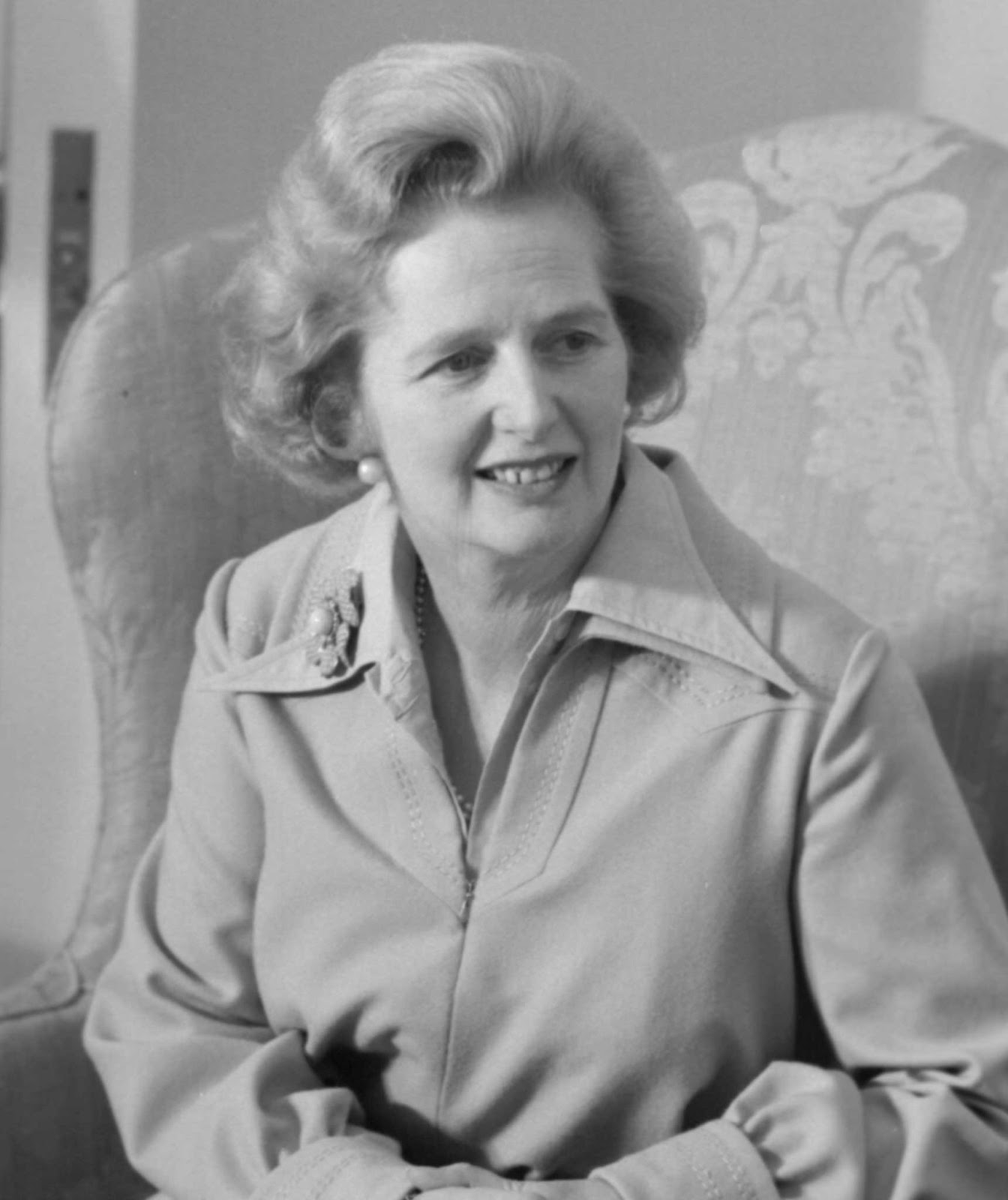
Under the Thatcher government, housing privatisation – including the sale of council houses - became a focus of policy accompanied, Ronald observes, by deregulation of the credit market so that by the end of 1990s “the homeownership rate was above 64 per cent” (p.23). Despite an initially cautious approach, Ronald explains that “…New Labour soon began to warm-up to owner-occupation”.  In 2005 plans to “extend homeownership to 75 percent of housing” were announced, with Brown during his tenure as Prime Minister “explicit about his desire to further expand opportunities for homeownership and enhance the features of an asset-based social security system.” (p.24) Thus, we might observe that the individual’s assumption of risk through home ownership can at least in part be historically located and be identified as the product of a politically consensual policy transformation – with this style of tenure operating in lockstep with emerging orthodoxies concerning individualism, welfare and citizenship.

The General Strike 1926 - crossing London Bridge
Kemeny, Ronald tells us, conflates private ownership to the development of “a reserve of housing wealth” that, amongst other things, “offsets pension shortfalls in old age” (p.22); whilst between the world wars the expansion of working class ownership was considered “a potential antidote to both the decline in the private rental sector, on one side, and labour-union agitation, social unrest and demands for the expansion of citizenship rights on the other.” (p.22) In post-war Britain, he namechecks MacMillan, Eden and Thatcher in identifying “an assumption that homeownership would improve civic responsibility and encourage support for conservative political parties…”. (p.29) Buying a house, then, appears to offer value way beyond any individual benefits – an alternative to state welfare provision, and a means of encouraging a certain political disposition in service of a particular type of social order.

Finally, Ronald identifies the current era as “a period of ‘total homeownership policy’ whereby this type of tenure is “almost universally considered the ‘best’ or ‘natural’ way to produce and consume housing” (30). ‘Tenure imperialism’, he calls it.

Where the heart is

Writing some years previously, Gurney[3] explores the ways in which the idea of ‘home’ – being ‘where the heart is’ and ‘where charity begins’, and ‘an Englishman’s castle’, is closely associated with owner-occupation in government policy. He observes of policy documents that: “’Home’ is frequently used to differentiate between the dwellings of householders in owner occupation and in rented accommodation; and dwellings of those in owner occupation are imbued with the warmth and security ‘home’ whilst renters are accorded a more Spartan language to describe their dwelling.” (p.172) In the 1995 Housing White paper, Gurney argues, the idea of ‘home’ exists in a much more meaningful way for those in home ownership than it does for renters, and is expressed through “ideas of love, warmth, comfort, pride, independence and self-respect” (p.173). 

Policy papers also associate home ownership with the uptake and expression of certain values. A 1971 Department of the Environment and Welsh Office command paper sees the government associate home ownership with social advance, whilst in 1981 the Department of the Environment has it that home ownership “ensures the spread of wealth through society…enables parents to accrue wealth for their children and stimulates the attitudes of independence and self-reliance that are the bedrock of a free society” This, proposes Gurney, “carries with it the expectation of home owners being good citizens, good parents and good caretakers.” (176)  Perhaps even more fundamentally, Gurney tells us, the 1971 Department of the Environment and Welsh Office command paper tells us that the desire for home ownership is a “basic and natural desire” (p.178), with the obverse presumably the case for those living under other tenancy arrangements.

I’m not sure how familiar my old girlfriend was with government housing policy papers - not very, is my guess. However, is hard not to wonder at the power of official pronouncement to shape individuals’ opinions and actions through various means.

And I would challenge the individual who responded in such glib fashion to the story in the Guardian to reconsider his (or her) position on the individualisation of risk. I would never argue that those of who own homes on the coast that are at risk from rising sea levels have not exercised choice in so doing. But it is clearly the case that the situation we find ourselves in is significantly the result of forces associated with political preference and the cultivation of certain values, and that accordingly we are threatened as much by socio-economic and political impacts as we are natural ones.

Had climate change as currently understood become an issue in the same way 100 years ago, the consequences for coastal dwellers might have looked very different.  Far fewer would have owned their homes and been exposed to the kinds of risks identified here. Had it happened before the 1970s housing boom then the amount of capital at stake for those who did own their homes would have been smaller relative to earnings, and a state welfare may have been better placed to supported losers. It is also well documented that sea defence in the UK was provided more on the basis of vulnerability in the UK until relatively recently. This is, of course, to simplify.  However…

With best wishes

Chris


[1] http://www.guardian.co.uk/money/2012/mar/07/flood-hit-homeowners-invest-defence
[2] Ronald, R. 2008. Market-Liberal Homeowner Societies: Questions of Convergance in & around an Anglo-Saxon model? Housing Finance International, March 2008, pp. 21-34.
[3] Gurney, C.  1999. Pride and Prejudice: Discourses of Normalisation in Public and Private Accounts of Home Ownership.  Journal of Housing Studies, Vol. 14. No. 2, 163-183.

Tuesday, 13 March 2012

Double Exposure?


UK government coy on new approach to flood risk insurance - industry body says 200,000 homes may become uninsurable

Does UK belong in European adaptation mainstream?

Imagine you are crossing the road. You look up as you hear the rumble of a heavy engine, and you see a lorry headed slowly towards you. The driver is hanging from his window, frantically shouting that his brakes have failed and that you should get out of the way. You try to move – to get to the safety of the pavement – but you can’t. It is a curious kind of terror – the truck is moving so slowly that it will take a while for the disaster to occur, although occur it must. You are left to contemplate your end at leisure, and in grim detail, while others look on. Welcome to the world of the British coastal climate ‘loser’ – if not yet a certainty, then a deeply worrying prospect.

Existing agreement will not be renewed

As things stand, homeowners who live in areas likely to be lost to the sea can already expect to lose everything without compensation. Now we are faced with the prospect that, in the mean time, those at the highest risk of flooding will either not be able to obtain or not be able to afford insurance for our homes. Last week UK newspaper The Guardian reported on remarks made by Parliamentary Under-Secretary for Natural Environment and Fisheries Richard Benyon to the effect that an agreement with the insurance industry – due to expire in summer 2013 – will not be renewed.[1]

The current understanding commits insurers to make insurance available to householders and small businesses as a feature of standard policies “if the flood risk is not significant” or, where there is significant flood risk, providing the Environment Agency is committed to reduce that risk below the ‘significant level’.  Whilst a new shared understanding between government and the industry is expected shortly, it is by no means clear what this will mean, and the messages from various communications are mixed. A Written Ministerial Statement in December 2011 expressed a commitment on the part of both government and the insurance industry to “making sure flood insurance remains widely available”, whilst hinting at the emergence of risk-based pricing – in other words, that those in properties most at risk can expect to pay more.[2] This represents a shift of gear from the recent orthodoxy of “a cross-subsidy…between those at low and high risk of flooding” as expressed in the final report of government working groups on this subject[3] (p.4).

Government asserts that “the primary problem in the future will be the affordability, rather than the availability’ of flood insurance premiums for households and small businesses” (p.4) – a state of affairs that it is seemingly content with, given the statement that “…premiums and excesses should reflect the risk of flood damages to the property insured”. (p.5) However, a new report from the Joseph Rowntree Foundation[4] suggests that the Association of British Insurers sees things rather differently, estimating that “some 200,000 households may become uninsurable when the current agreement ends in June 2013” with the prospect of neighbourhoods in which house are unsaleable and uninhabitable – to say nothing of the catastrophic personal effects this state of affairs might bring (p.3).

This all depends, of course, on which way the Government elects to jump when deciding upon which option it will go with when the current agreement expires. According to the report these range from doing nothing and allowing the market to adjust; ‘Facilitation’ involving support of the market through, for example, improving education and signposting to help ensure take up; and the creation of a ‘risk pool’ to which would see the combination of a free market with subsidisation of high risk property to ensure that affordable cover remains available. Besides a recommendation that ‘Facilitation’ options are taken up regardless, the report is coy as to preferences.

European comparisons

A recent analysis of national climate change adaptation strategies in Europe by the Partnership for European Environmental research (PEER) [5] stresses that such strategies will always involve a mixture of approaches” which it classifies broadly as:
  • Living with risks/bearing losses - an approach that accepts that certain systems, behaviours and activities can no longer be sustained (the abandonment of some areas of coast, for example)
  • Preventing effects/reducing exposures - illustrated by the practice of implementing technical solutions such as sea defences, and
  • Sharing responsibility – an approach which implies sharing the responsibility for financial and social losses or exposure to risk. (p.58-59)
 Insurance falls under the third of these approaches, although the Rowntree report reinforces the point that “The UK is peculiar in having a purely market-based approach to insurance in which risk is reflected in the premiums paid and borne by individual households” (p.2) and that “…in many EU countries, as well as in the USA, the provision of insurance or relief against flood damage is provided by or is guaranteed by the government.” (p.3) Thus, UK’s idea of ‘sharing responsibility’ might already be considered the ‘lite’ version. 

Despite the broad international adherence to the mixed model approach to adaptation, the PEER report asserted that “different emphases can be noted between countries in relation to how they deal with risk and make decisions about different adaptation options.” (p.61) Through policies of allowing areas of coast to be lost to the sea (and for homeowners to bear the costs) at the time the PEER study was undertaken, the UK had already planted one foot firmly in the ‘living with risks/bearing losses’ category. Subsequent announcements of reduced investment in sea defences and an increased requirement for local contribution in such infrastructure in the future suggests a corresponding withdrawal from the ‘Preventing effects/reducing exposures’ category. To now leave flood insurance cover to the vagaries of the market would surely see the UK risk an exit the identified mainstream ‘mixed-model’ approach, and leave coastal losers looking into eyes of the driver of the climate change truck. We’re all in it together, anybody?

Best wishes

Chris


[1] http://www.guardian.co.uk/money/2012/mar/07/flood-hit-homeowners-invest-defence
[2] http://www.parliament.uk/documents/commons-vote-office/DEFRA-5-Flood-Risk-Management-Arrangements.pdf
[3] Defra. 2011. Flooding and insurance: a roadmap to 2013 and beyond Final Report of the Flood Insurance Working Groups. London: Defra.
[4] O’Neill, J. & O’Neill’ M. 2012. Social justice and the future of flood insurance. York: Joseph Rowntree Foundation
[5] Swart, R., Biesbroek, R., Binnerup, S., Carter, T.R.,2009., Cowan, C., Henrichs, T., Loquen, S., Mela, H., Morecfort, M., Reese, M. and Rey, D. Europe Adapts to Climate Change: Comparing National Adaptation Strategies PEER Report No. 1. Helsinki: Partnership for European Environmental Research.


Wednesday, 22 February 2012

Notes on the costs of adaptation


Whilst I’m interested in climate change science and the debate that surrounds it, my main preoccupation lies with how the effects of change might be dealt with in just fashion.  It seems to me that unpicking the positions around the climate change science debate requires an understanding of natural science methodologies and a virtually unlimited amount of time - neither of which I have. Nonetheless, there are aspects to climate science that are hugely important in considerations of just societal responses to the impacts of climate change.   

The most recent Intergovernmental Panel on Climate Change assessment report[1] argues both that “Warming of the climate change system is unequivocal” (2007, p.30) and that “Most of the observed increase in global average temperature since the mid-20th century is very likely due to the observed increase in anthropogenic GHG concentrations.” (2007, p.39) The largest growth in greenhouse gas (GHG) emissions between 1970 and 2004, it proposes, came from energy supply, transport and industry, during which time emissions grew by 70%.
Coasts – my area of interest – “are projected to be exposed to increasing risks, including coastal erosion…and sea level rise” (2007, p.46).  The “densely populated and low-lying megadeltas of Asia and Africa” and “small islands” are identified as especially vulnerable in this regard.

The 2007/2008 UN Development Report Fighting Climate Change: Human Solidarity in a Divided World[2] also flags up coastal zones in this regard, adding that the “consequences could be apocalyptic” (2007-8, p.3) for the world’s poorest people, an observation that is accompanied by the assessment that “those who have largely caused the problem – the rich countries – are not going to be those who suffer the most in the short term.” (2007, p.5)
In rich countries, the report suggests, “coping with climate change to date has largely been a matter of adjusting thermometers, dealing with longer hotter summers, and observing seasonal shifts” As sea levels rise, it continues, “Cities like London and Los Angeles may face flooding risks…but their inhabitants are protected by elaborate flood defence systems.” (2007, p.9)
Quite rightly, the report urges that “the world’s poor cannot be left to sink or swim with their own resources while rich countries protect their citizens behind climate-defence fortifications. Social justice and respect for human rights demands stronger international commitments on adaptation” (2007, p.13) if we are avoid what Desmond Tutu has called “drifting into a world of adaptation apartheid.” (2007, p.24)  We might exercise caution, however, in assuming a uniformity of insulation against the effects of climate change for those who live in the ‘rich’ world -  for example, those residents of New Orleans whose lives were shattered by the flooding that attended the arrival of Hurricane Katrina.  The report correctly observes that even those in the richest countries can be vulnerable, and that this is exacerbated when “impacts interact with institutionalized inequality.” (2007, p.16) 

The IPCC proposes that even if emissions of GHGs were to be stabilised (which to my untrained eye looks most unlikely any time soon) “anthropogenic warming and sea level rise would continue for centuries” (2007, p.46) which means that a focus on adaptation involving a just distribution of costs and benefits is an urgent priority. Adger[3] argues that the real justice question in what he describes the “one of the most contentious issues of global governance” (2010, p276) is not about the “distribution of rights to emit” (2010, p.278) which so preoccupies governments but “the avoidance of catastrophic harm” (2010, p.278). And he suggests that if human activities are the cause of climate change (and this seems to be accepted in the relevant UK government discourse at least), “then adaptation involves issues such as compensation and liability.” His “human-centred view of security” (2010, p.281) foregrounds personal  well-being and “individuals  and localities having the options to respond to threats to their human, environmental and social well-being imposed by climate change, and having the capacity and freedom to exercise these options.” (2010, p.281)

Around England and Wales in recent years, people have learned that the cost of protecting them and their homes from the sea will at some point outweigh the benefits offered to the public purse - assuming it doesn’t already. For these people – resident in the rich world – the prospect can look devastating, and I’m sure that as one of them I’m not alone in having found my options to respond to Adger’s threats limited indeed. All of us whose well-being is threatened by sea level rise as a consequence of man-made climate change - whether in the megadeltas of Asia and Africa, in New Orleans or perched on eroding cliffs in Norfolk – warrant a better shake.

With best wishes

Chris


[1] Intergovernmental Panel on Climate Change (IPCC). Climate Change 2007: Synthesis Report. Contribution of Working Groups I, II and III to the Fourth Assessment Report of the Intergovernmental Panel on Climate Change.

[2] United Nations. 2007. Fighting Climate Change: Human Solidarity in a Divided World. New York.
[3] Adger, W.N. 2010. Climate Change, Human Well-Being and Insecurity. New Political Economy. Vol 15, No 2, pp.275-292.